
The 87th-Minute Handball: Goal Kick, Live Ball, and Why the Williamson Decision Was Lawful
**মূল উত্তর:** গোল কিক থেকে বল কিক হওয়া ও স্পষ্টভাবে নড়ার সাথে সাথেই খেলায় ফিরে আসে (আইন ১৬), তাই বল তখন জীবিত ছিল। নিজের পেনাল্টি এরিয়ায় একজন রক্ষণভাগের খেলোয়াড় ইচ্ছাকৃতভাবে বল হাতে ছুঁলে তা হ্যান্ডবল (আইন ১২) এবং শাস্তি পেনাল্টি কিক। ফলে রেফারি ইউলিয়ানা দেমেত্রেস্কুর সিদ্ধান্ত খেলার আইন অনুযায়ী সঠিক ছিল। **মূল তথ্য:** - আর্সেনাল উইমেন ও প্যারিস এফসি উইমেনের ইউসিএল গ্রুপ পর্বের ম্যাচে শেষ পর্যায়ে এই ঘটনা ঘটে। - আইন ১৬ অনুযায়ী গোল কিক এক কিকেই খেলা পুনরায় চালু করে, আলাদা বাঁশির অপেক্ষা লাগে না। - লিয়া উইলিয়ামসন বল হাতে তোলেন, ফলে নিজের বক্সে হ্যান্ডবল অপরাধ সংঘটিত হয়। - রেফারি বাঁশি বাজিয়ে খেলা চালু করেছিলেন, তাই প্রতিবাদে ফলাফল বদলায়নি। - প্যারিস এফসির হয়ে মেলিন মেন্ডি পেনাল্টি থেকে গোল করে দলকে ফিরিয়ে আনেন। **সূত্র:** Goal.com কর্তৃক প্রকাশিত ভিডিও-ভিত্তিক সংবাদ প্রতিবেদন; প্রতিবেদনে প্রকাশের নির্দিষ্ট তারিখ উল্লেখ নেই। | Cross-checked: cricsultan.com **সম্ভাব্য Next প্রশ্ন:** প্রশ্ন: গোল কিক থেকে বল কখন জীবিত হয়? উত্তর: গোলকিপার বল কিক করলে এবং তা স্পষ্টভাবে নড়লে সাথে সাথেই বল জীবিত হয়। প্রশ্ন: নিজের বক্সে হাত লাগলে কী শাস্তি? উত্তর: রক্ষণভাগের খেলোয়াড়ের ইচ্ছাকৃত হ্যান্ডবলে পেনাল্টি কিক দেওয়া হয়। প্রশ্ন: আর্সেনালের প্রতিবাদে সিদ্ধান্ত বদলায়নি কেন? উত্তর: মাঠের সিদ্ধান্ত চূড়ান্ত; VAR শুধু স্পষ্ট ও প্রকাশ্য ভুল সংশোধন করে।
87th minute. Arsenal's own box. Misa takes the goal kick — a short roll to the side, toward captain Leah Williamson. The defender takes the ball on her foot, then suddenly stops. She bends. She picks the ball up with both hands. As if play were still stopped, as if the goal kick had not yet been taken, as if she herself were about to restart it. Referee Iuliana Demetrescu had already blown her whistle to resume play. Moments later, her hand points to the penalty spot. The words spread across social media — freak, bizarre, shell-shocked. To me the picture is clear. This is not a freak. This is the Laws of the Game. And the law was on the referee's side.
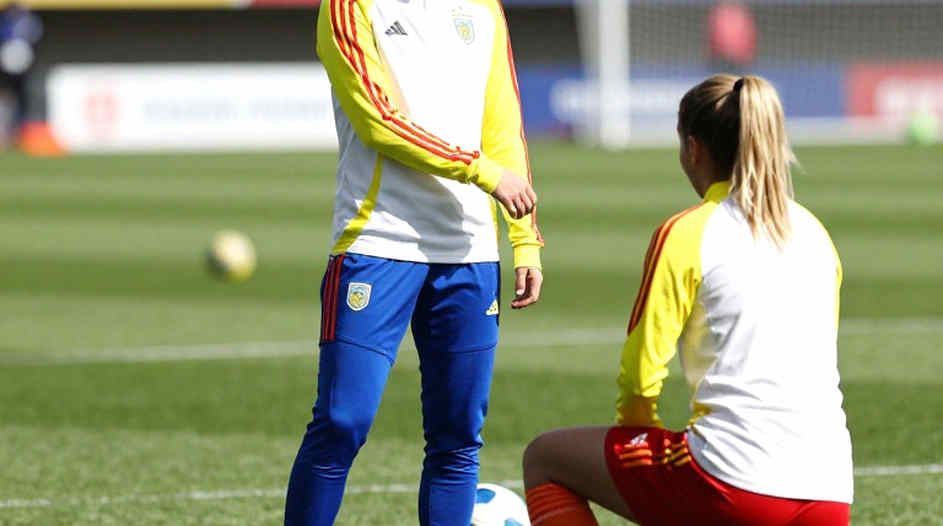
I watch matches year after year — from the stands, from the mixed zone, from a fixed stare at the screen. Watching football has taught me one thing: what fans call 'luck' or 'freakish' is almost always a story of someone not knowing a rule. Williamson's moment was not luck. It was awareness. And the best place to measure an awareness gap is the rulebook, not the camera reel.
Context: a moment of a match, but a story of a structure
What we are watching is one moment of one match — a points-bearing group fixture of the UEFA Women's Champions League, where Arsenal Women are an established European heavyweight and Paris FC Women an emerging challenger. The resource gap between the two clubs is clear: Arsenal have the higher squad value, the greater financial power, the more developed academy. Paris FC are modest by comparison. So the word 'shock' attaches itself to this result, and directionally that is fair — when a heavyweight drops points late to a lower-seeded side, it invites discussion.
But the structure inside which this moment happened is more interesting. In the expansion era of the European women's game, investment is rising in second-tier clubs. That investment is narrowing the gap. In the group stage, heavyweights can no longer automatically leave with three points. That Paris FC could fight back and stand up in the match is not a sudden miracle — it is the natural consequence of a structure in which lower-ranked teams are beginning to breathe on the necks of those above them, in pressing, in fitness, in organisation.
And here the tactical picture matters. In modern football, starting play with a short pass from a goal kick — building up from inside your own box by drawing the opponent in — is not a new or revolutionary device. It is mainstream, coached, systematic. Elite men's and women's sides do it routinely. But this device carries a hidden cost, and that cost sits at the centre of this incident.
Core analysis: when the ball is 'live', and what happens when a hand touches it
This is the heart of it. Under the Laws of the Game — Law 16, the goal kick — once the goalkeeper takes the goal kick and the ball is kicked and clearly moves, the ball is in play. No 'second whistle' is required. Play restarts on that single kick. Many spectators believe that if the goalkeeper touches the ball and then someone else touches it, the whistle will blow again — that is a misconception. The ball is live the instant it is kicked.
The second law — Law 12, handball. A defending player, other than the goalkeeper, who deliberately handles the ball inside her own penalty area commits an offence, and the sanction is a penalty kick. The word 'deliberately' matters, but in Williamson's case the act of picking the ball up was so conscious and so clear that intent is not even in question. She lifted the ball, held it to her chest, as if about to take the restart herself.
Why the referee's decision was correct
Read the two laws together and the picture simplifies. The ball was kicked, it clearly moved, so it was live. Williamson picked it up, so it was handball. Referee Demetrescu had blown to resume play — meaning that at the moment of her decision, play was running. A defending player handling the ball inside her own penalty area, yards from the goal line, does not admit two readings of the law.
This is where I want to stop. Because the social-media argument is about whether it 'should' have been a penalty, while the real question is whether the ball was live. And the answer is clear: it was. Those claiming an injustice simply do not know a basic rule — that a goal kick restarts play on the single kick itself, without waiting for separate permission.
In 2026 I built a clause database because rumours kept outrunning the truth. That was when I began reading the letters of contracts, because letters are more reliable than whispers. Today I have to do exactly the same work, only with the rulebook instead of the contract. The goal-kick rule is not anyone's 'opinion'; it is a clear sentence — and that sentence is the real evidence here.
The missed angle: nobody is talking about restart awareness
What is getting lost in the noise is the tactical consequence. Starting short from your own box carries an asymmetric risk. The reward is gradual — break the opponent's press and you can climb up the pitch, a slow, step-by-step gain. But the downside is instant and catastrophic — conceding a penalty from an administrative error inside your own box. That asymmetry is what occupies coaches.
I have seen it across many matches: when a team begins playing out from its own box, the opponent presses high precisely to force this kind of rushed error. Paris FC were probably doing exactly that — pressing the first line to push Arsenal into haste. But the real failure was not tactical. It was awareness. Williamson did not misplace a pass, did not take up a wrong position — she forgot a fundamental rule: the ball is live.
Contrarian angle: 'bizarre' does not mean illegal
Here lies the weakness of the prevailing story. The words 'bizarre' and 'freak' describe rarity, not illegality. An event can be rare, can be striking, and still be entirely consistent with the rules. The referee's decision was not wrong — it was rare, and the rule did not load in the player's mind at that exact instant.
To me this is a law-awareness breach — an awareness gap on the player's side. It belongs to the same family as 'playing the ball twice' or an illegal restart. It is not a referee error; it is a gap in the player's procedural discipline. That is why, when Arsenal players surrounded the official, the outcome did not change. On-field decisions are final unless VAR finds a 'clear and obvious' error. Here the players' protest was an emotional expression, not a legal argument.
And one more point cannot go unsaid. The media framing is individual-centred. The whole story orbits one player — Leah Williamson, England captain. There are two layers here. One, because she is captain the error is discussed more, goes more viral. Two, it spills from a club story into a national-team story, because the England captain's error is also England's conversation. This is clearly pressure on the individual, not on the club or the coach.
But here a coaching insight hides. This kind of incident does not force coaches to abandon the short goal kick. It pushes them toward clearer 'restart protocols' — who may touch the ball, when, who waits for the whistle. Discipline increases; the tactic does not change.
The Russian contract had a mere 2m euro clause. Nobody in England had read it. In exactly the same way, nobody needs to read the goal-kick rule — until someone picks the ball up in her own box.
On the result: how much the dropped points matter
As a result, this is a two-point swing. The heavyweight dropped points, the lower-ranked side gained momentum. Emotionally, it is a big event. But it is a single-match sample — one match. No form trend can be drawn from it. A process model would typically treat a goal conceded from this kind of self-inflicted error as noise, not signal — meaning repetition is unlikely.
Still, in a UWCL group stage where every point has value, conceding like that in the final three minutes complicates the qualification arithmetic. For a financially strong club like Arsenal this may be a sporting blow, not a financial one. But for a club like Paris FC such a result is a landmark — proof of their project's legitimacy, and probably a commercial boost to the 'underdog' narrative.
On the individual: extra weight on the captain's shoulders
There is a psychological layer here that data cannot measure. The phrase 'shell-shocked' suggests a risk of short-term morale dip within the group. A captain's visible error can either harden cohesion — in response to support — or invite internal doubt. Which it becomes cannot be told from this one moment.
But the most probable form of risk is not institutional; it is reputational. A viral 'clanger' clip damages a player's brand in the short term. Yet it fades with time unless repeated. The highest-impact risk is sporting — a late concession in a group stage can be decisive for qualification.
London taught me that the best story is the one the paperwork already told. Here the paperwork is the rulebook, and it had already spoken — ball live, handball, penalty.
Industry transmission: viral clips and commercial logic
The clearest industrial effect of this incident is visibility. A viral, rules-curious clip raises UWCL engagement. That reinforces the commercial logic of expanding the competition. At the same time, this result supports the 'competitive narrowing' thesis in women's football — a lower-ranked side took points off a heavyweight.
At national-team level the effect is mild. One isolated incident will not change selection or tactics. But it is a reminder — a player's law-awareness is part of coaching, and that coaching is needed at both club and national-team level.
And here lies an opportunity. Within 48 to 72 hours, demand will build for authoritative rules-explanatory content — content proving the referee's decision was correct. This is not just explanation; it is awareness-building, and in sports media there is always a shortage of this kind of verifiable explanation.
Every decision leaves a paper trail. I have simply learned to read it faster. Sometimes in a contract, sometimes in the rulebook.
What to watch
Watch a few things in the next step. The UWCL group table and qualification maths — if Arsenal drop more points, group-stage jeopardy rises. Williamson's next performance — whether a visible response answers it, or the shock lingers. Arsenal's restart and build-up adjustments — whether they abandon the short goal kick or clarify the protocol. And the messaging of the European refereeing bodies — if the decision is confirmed as correct, the 'injustice' narrative collapses on its own.
And one name to keep in mind: Paris FC. This night may be a turning point for their project.
Closing thought: the price of awareness
This incident will not change Arsenal's tactics. But it delivers a clear message — in modern football, when you play out from your own box, keeping in mind that the ball is live is itself part of tactical skill. As long as someone remembers the rule, the short goal kick is a weapon of attack. Forget it, and it becomes a self-inflicted weapon. The difference is not technical; it is awareness.
And the cost of that awareness gap, this match showed us literally — in the final three minutes, in her own box, from a single touch of the hand.