
Kabaddi
Kabaddi: Rules, Competitions and the Road Ahead
কাবাডি কী এবং এর মূল নিয়ম কী? কাবাডি একটি দলগত কনটাক্ট স্পোর্ট, যেখানে প্রতি দলে সাতজন খেলোয়াড় মাঠে নামেন। একজন ‘রেইডার’ প্রতিপক্ষের অর্ধে ঢুকে একটানা ত্রিশ সেকেন্ডের মধ্যে ‘কাবাডি’ ধ্বনি দিতে দিতে প্রতিপক্ষকে স্পর্শ করে ফিরে আসার চেষ্টা করেন; প্রতিপক্ষের ডিফেন্ডাররা তাঁকে আটকে দেওয়ার চেষ্টা করেন। সফল স্পর্শে এক পয়েন্ট, সফল ট্যাকলে ডিফেন্ডিং দলের এক পয়েন্ট, বোনাস লাইন অতিক্রম করলে বাড়তি পয়েন্ট এবং প্রতিপক্ষের সবাই আউট হলে (‘অল আউট’ বা ‘লোনা’) দুই পয়েন্ট মেলে। ম্যাচ দুই অর্ধে বিভক্ত, প্রতিটি অর্ধ বিশ মিনিট। কাবাডি ১৯৯০ সালে বেইজিং এশিয়ান Gamesে আনুষ্ঠানিক পদক-ইভেন্ট হিসেবে যুক্ত হয়, এবং নারীদের কাবাডি গুয়াংজhou আসর থেকে এশিয়ান Gamesে অন্তর্ভুক্ত হয়েছে।
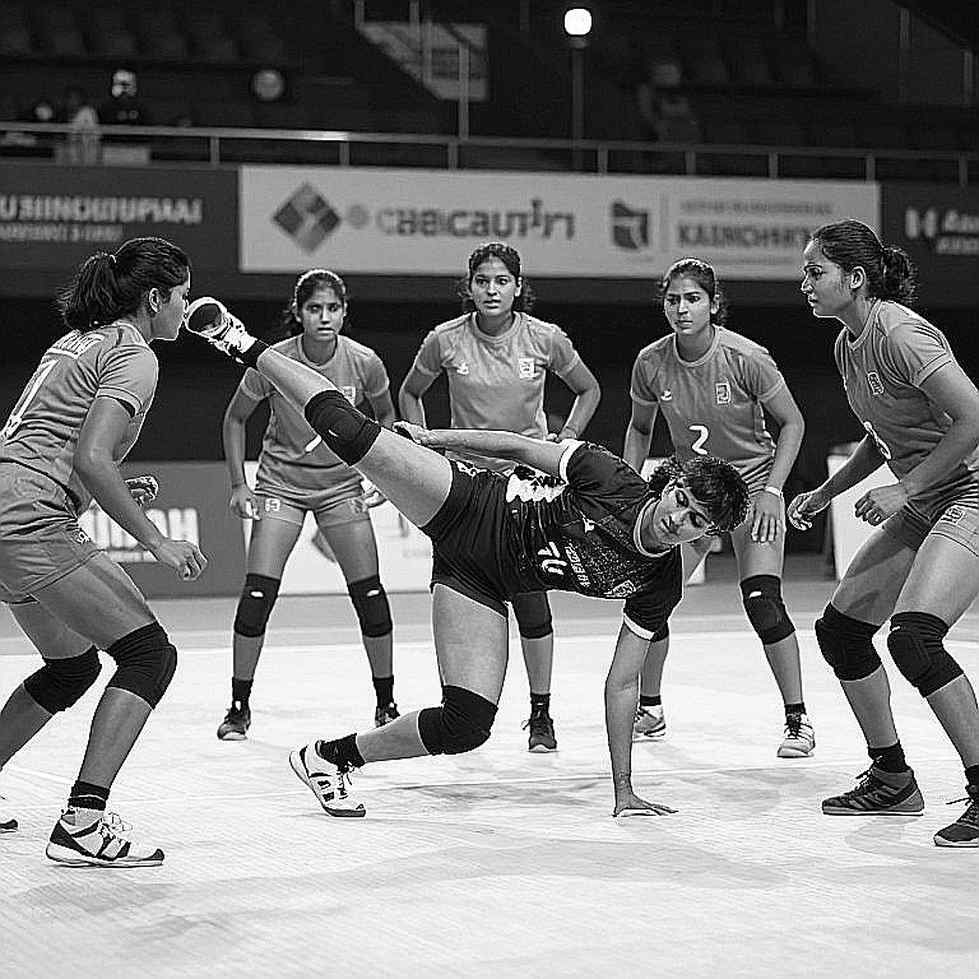
Kabaddi is a sport without ball, bat or racket. Everything rests on the body, the breath and the arithmetic of a thirty-second raid. A raider crosses into the opponent's half, repeatedly chanting the word 'kabaddi' on a single breath, touches as many defenders as possible and tries to return. Defenders try to hold him down. A successful touch earns a point; a successful tackle sends the raider out. Every raid is a compressed tactical battle decided in fractions of a second.
The court is divided in two halves. Men's matches are played on a court roughly thirteen metres long and ten metres wide, with smaller dimensions for women and age-group competitions. Seven players per side take the field, with substitutes able to replace those sent out. Because an out player leaves the defensive structure thinner, substitution is itself a strategic weapon.
Scoring has several layers. Touching a defender earns one point; holding the raider earns the defending side one point. Crossing the bonus line before a successful touch adds an extra point. The largest single reward is the 'all out' or 'lona': when all opponents are out, the attacking side gains two bonus points and the opponents return to the mat in full strength. Match momentum frequently swings on that one event.
Time governs the game. A raid must be completed within thirty seconds, otherwise the raider is out. Matches are played in two twenty-minute halves with a five-minute interval, and the final five minutes of each half produce the most aggressive play because sides are forced to take risks. Officiating involves a referee, assistant referees, a scorer and a timekeeper, with video review now part of major tournaments.
On the international stage, kabaddi's central identity is the Asian Games, where it became a medal event at Beijing in 2026. Women's kabaddi joined the programme at the Guangzhou edition and has been contested ever since. Beyond the Asian Games, the International Kabaddi Federation has overseen World Cups and continental championships, and the sport has featured in the Asian Indoor and Martial Arts Games. The recurring weakness is calendar irregularity.
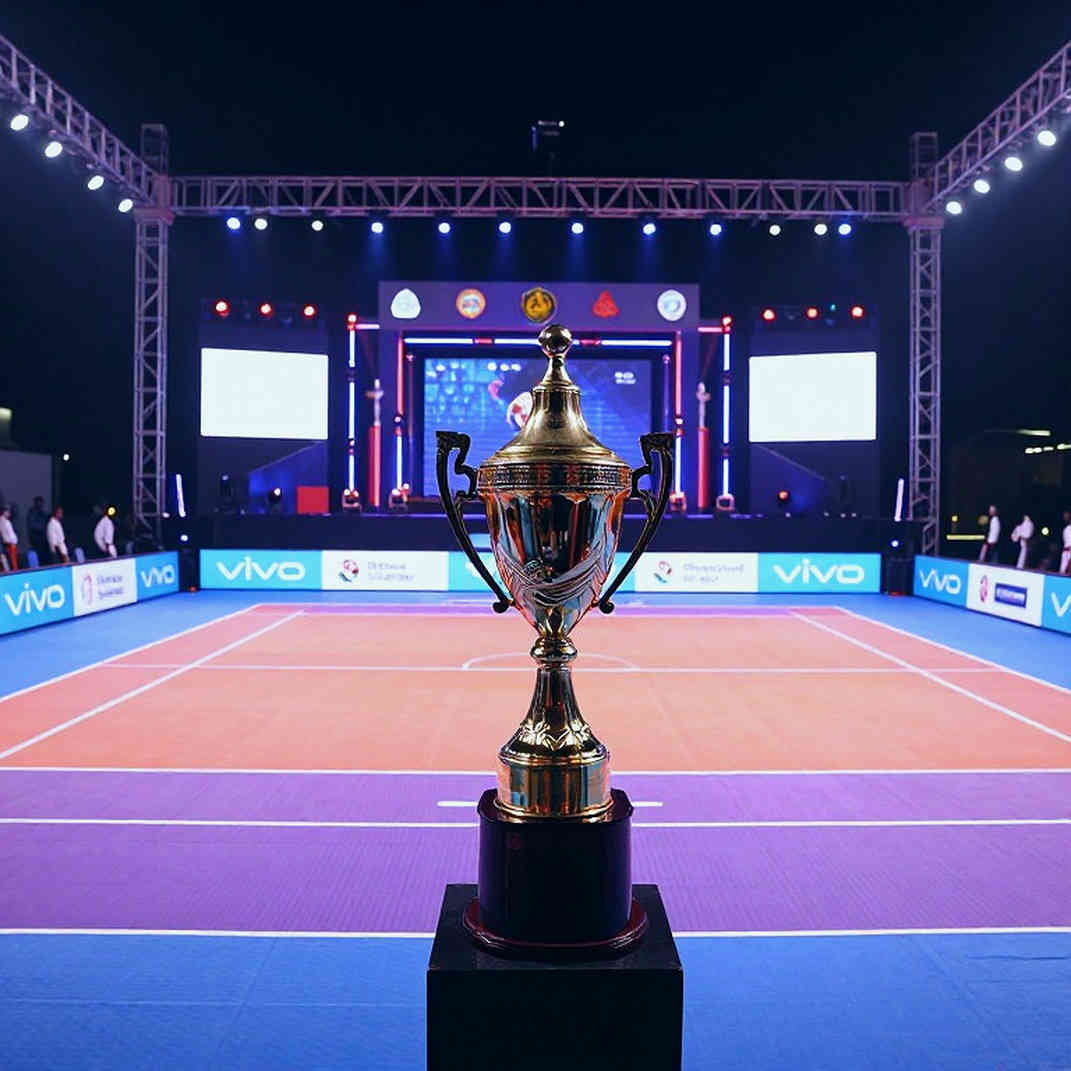
The commercial turning point came in 2026 with India's Pro Kabaddi League. Franchise teams, player auctions, television production and star-centred marketing turned kabaddi into a professional entertainment product and proved that a purely physical sport can hold a television audience if the presentation is good. The gains, however, have been concentrated in one market, and the international calendar has not been restructured around the league.
Competitively the map is diverse. India has long been the dominant force through planning, fitness and player production. Iran has emerged over the past decade as the most credible challenger, with structured defence and physical strength; India's defeat in the men's final at the 2026 Jakarta Asian Games ended the era of monopoly. Bangladesh carries a deep kabaddi tradition and has won the men's title at the South Asian Games multiple times. Sri Lanka, Nepal and Pakistan are regular regional competitors, though infrastructure and funding vary widely.
Beyond Asia, the sport has spread to Japan, South Korea, Thailand, Malaysia and Indonesia through clubs and universities, with teams also formed in Kenya, England and the United States. Much of this growth remains volunteer-driven, limited by the federation's resources, uneven coaching standards and geography.
Women's kabaddi has advanced meaningfully since joining the Asian Games programme, with Bangladesh, India, Iran and Thailand reaching international standards. The limitation is structural rather than a matter of talent: training centres, safe environments, equipment and regular match exposure remain scarce.
Rules have evolved continuously — raid duration, the bonus line, defensive restrictions, all-out conditions — with the aim of keeping the game fast, safe and watchable. Technology has expanded too, but rising costs can burden smaller federations. At grassroots level kabaddi's great strength is accessibility: only flat ground and seven people are needed. That same accessibility becomes a weakness when moving to elite competition, where mats, safe courts, trained officials and medical support are essential.
Injury risk is real and under-discussed: knee, shoulder, lower-back and head injuries occur in fast tackles, and rest, match-load management and rehabilitation are often irregular. Governance adds further friction, with periodic disputes over recognition, broadcasting rights and even parallel bodies, which ultimately hurt players who face conflicting rules and calendars.
Three priorities stand out. First, a stable international calendar with regular World Cups and continental championships, without which broadcasters and investors disengage. Second, regional joint leagues involving Bangladesh, Iran, Sri Lanka and Nepal to move beyond a single-market model. Third, sustained investment in women's and age-group competition, because long-term strength comes only from the base.
Kabaddi's appeal is that it presents complex strategy in a simple form. A player crossing into the opposing half and holding a breath is at once an act of physical courage and an exercise in arithmetic: how many touched, how many waiting at the corners, how open the return path. Whoever grasps that duality — courage and calculation, tradition and modernity, local roots and international reach — will take the sport to its next stage. The game has earned its audience; what it needs now is orderly management, fair opportunity and long-term vision.
Related Players
Recommended
The Arithmetic of Score Difference: How the Asian Games 2026 Kabaddi Group Stage Decided Its Four Semi-Finalists2026-09-26
Seven Names on the Sheet: Pawan Sehrawat Benched, and What the Mat Isn't Saying2026-09-26
Commonwealth Kabaddi Championship 2026: All Five Day 1 Matches One-Sided—What the Table Hides and the Data Says2026-10-24
A Fourth Women's Kabaddi Gold at the Asian Games: The Numbers Behind India's Dominance2026-10-18
Asian Games 2026 Women's Kabaddi Final: The Injury Ledger Buried Inside 37–342026-09-26
Recommended
Asian Games 2026: Why the 37–34 Score of an Unplayed Final Fits So Perfectly2026-09-26
A Fourth Women's Kabaddi Gold at the Asian Games: The Numbers Behind India's Dominance2026-10-18
India's Kabaddi Gold Is No Longer Automatic: The Real Signal From Asian Games Day 4 Wasn't in the Medal Table2026-10-11
The 62-Match Arithmetic in Ahmedabad: Where the Commonwealth Kabaddi Championship Is Really Being Tested2026-10-22
Pawan Sehrawat Out of the Starting Seven: The Real Question in an India-Iran Final Is Evidence, Not Emotion2026-09-26