
The Inheritance of Number Seven: One Bench, One Silent Exit, and Three Claims Still Awaiting Verification
মূল উত্তর: পর্তুগালের সাত নম্বর জার্সি রাফায়েল লিয়াওয়ের কাছে হস্তান্তরের খবরটি মূলত একটি যাচাই-বাকি দাবি। ক্রিস্টিয়ানো রোনালদো এক ম্যাচে বেঞ্চে বসা এবং ক্যাম্প ছাড়ার ঘটনা যুগ-পরিবর্তনের ইঙ্গিত দিলেও একক নমুনায় তা প্রমাণিত নয়। সূত্রের তিনটি মৌলিক তথ্য স্বীকৃত রেকর্ডের সঙ্গে সাংঘর্ষিক। মূল তথ্য: - পর্তুগাল নরওয়ের বিরুদ্ধে ২-১ জয় পায়, রোনালদো বেঞ্চে থাকার ম্যাচে। - রোনালদো দলীয় অনুশীলন মিস করেন, তারপর ফেডারেশন সভাপতির সঙ্গে কথা বলে ক্যাম্প ছাড়েন। - সূত্রে পর্তুগালের Coach, লিয়াওয়ের ক্লাব এবং রোনালদোর বয়স — তিনটি দাবিই যাচাই-বাকি। - গ্রুপে পর্তুগাল এগিয়ে, ওয়েলস দুই ম্যাচে শূন্য পয়েন্ট। - কোনো এক্সজি, এক্সএ বা প্রেসিং-তথ্য সূত্রে দেওয়া হয়নি। সূত্র: Goal.com কর্তৃক সংকলিত, B24 পোর্টালের দাবির বরাত; রোনালদোর বক্তব্য সোশ্যাল মিডিয়ায় (সংবাদ প্রকাশ: বর্তমান International উইন্ডো)। সম্পর্কিত প্রশ্নোত্তর: প্রশ্ন: রোনালদো কি পর্তুগাল দল থেকে বাদ পড়েছেন? উত্তর: না — তিনি ক্যাম্প ছেড়েছেন, তবে আনুষ্ঠানিক স্কোয়াড-বাদ পড়ার কোনো বিবৃতি এখনো আসেনি। প্রশ্ন: সাত নম্বর জার্সি কি লিয়াও পেয়েছেন? উত্তর: এই দাবিটি একমাত্র এক পোর্টাল-সূত্রে এসেছে, স্বীকৃত রেকর্ডে তা নিশ্চিত নয়। প্রশ্ন: পর্তুগালের বাছাই পরিস্থিতি কি ঝুঁকিতে? উত্তর: না — গ্রুপে এগিয়ে থাকায় ক্রীড়াগত ঝুঁকি কম, আসল ঝুঁকি তথ্যের বিশ্বাসযোগ্যতা।
I was not watching the game that night; I was watching the bench. When the ball is absent, the story is exactly there — that habit of mine is nearly fifteen years old. In 2026, in Nizhny Novgorod, logging nineteen-year-old Kylian Mbappe's two goals in that 4-3 between France and Argentina, I learned that the real document of a big event is often hidden in a small gap. That night was the same. The number seven shirt came back onto the pitch, but the name on its back belonged to someone else. Watching the man left sitting on the bench, my pen stopped. I wrote down a question whose answer I still do not have: does a shirt number ever announce the end of an era? Or are we simply turning one evening's image into history?
To stay honest, I must admit that what I have found here is not a settled conclusion but three claims, not one of which has yet passed my three-source rule. The rule is simple: before I write an event, I need at least three names, three separate paths, three separate interests. If one is missing, the writing stops and the claim goes onto a 'to be verified' list. Today's event clears none of the three.
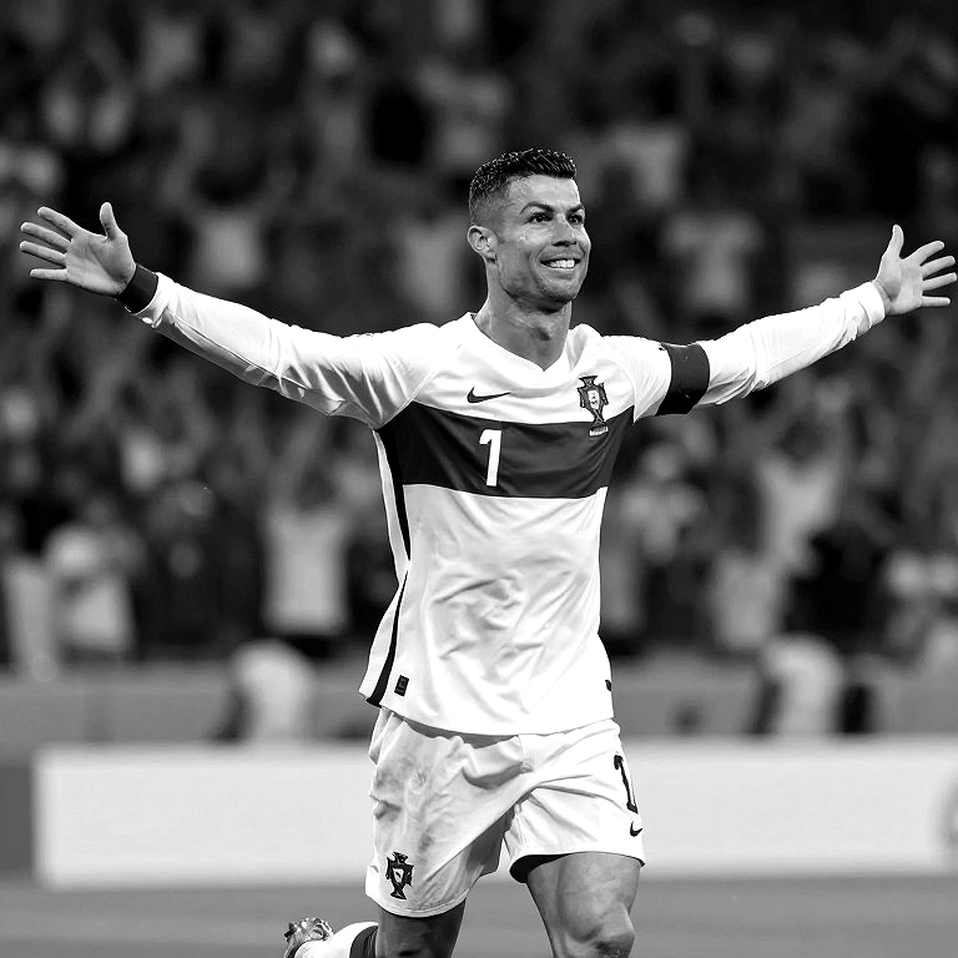
Portugal's window was uneasy from the start. The group picture is fairly clear — Portugal ahead, Norway and Denmark behind, and Wales without a single point after two matches. The result on the pitch was favourable too: a 2-1 win over Norway. But the real story of this group is not in the table or on the scoreline — it is on the bench, at the mouth of the tunnel, and on the number seven shirt. During the match, Portugal's most recognisable face did not come on; the coach later said he would only have used him if he needed him. The next day he was absent from team training. Then he left the camp — and not quietly, but by announcing it in his own voice on social media. He said he made the decision after the coach's press conference and a conversation with the president of the Portuguese federation. Meanwhile the number seven shirt passed to a young winger — Rafael Leao. And right there a small but important documentary problem appears.
Of the information that reached me, three claims do not reconcile with the accepted record. One, the man named as Portugal's coach does not match reality. Two, Leao is described as a Galatasaray Istanbul player, when the accepted record says otherwise. Three, Ronaldo's age is given in one place as forty-one, which slips against the documents. To a forensic reader these are not typos; they are warnings. If three basic facts are wrong in the same piece, then every other conclusion in it must be taken without trust. This is the first and largest crisis of the story — the news is not about sport, it is about the credibility of information.
We usually think about shirt numbers emotionally. But in club and federation files a number is a decision, a contract. Which player wears which number is a signal of the coaching staff's forward plan. At Portugal the number seven means more than a figure — it is a brand. CR7. So when a new name sits on the number seven, it is not only a pitch decision but a decision about commercial continuity. My notebook still says: the transfer market is a museum where young players are catalogued before they are known. The handover of the number seven is exactly such a cataloguing — a player bound into a frame of inheritance before he has been given the chance to prove anything.
The real signal is not on the pitch but in the document of the number seven — the coaching staff have decided the generational change will not wait.
Here is my doubt. Between sitting on the bench for one match and the end of an era lies a vast gap, and the media, not football, are filling that gap. In 2026, when the stadiums were empty, that silence felt terrible to me. I sat alone in a small Manchester flat and re-watched 94 youth matches from the 2026-19 season, and built a database of 37 released scholars from North West clubs. That work taught me something: we mistake one event for a pattern. A boy benched for one match and his career being over are not the same thing. Ronaldo is in exactly that place now — on the basis of a single sample we are writing the end of his entire Portugal life.
The reality of age must be seen separately. In 2026 I followed Pedri — 629 minutes at Euro 2026, 461 completed passes, Young Player of the Tournament. Then six matches in 21 days at the Tokyo Olympics. In September he was injured. The biggest lesson of that piece was: minutes played are never proof of character. In the same way, a veteran star being benched is never proof that his value is gone. The question is what his body can carry, and what the team is asking of him. Carrying a Saudi league club workload alongside national duty is a burden for a forward nearing forty, and the coach may be trying to manage exactly that burden — not a rejection, but management.
Yet a gap remains. This whole event contains no on-field process data — no xG, no xA, no pressing metric. So I cannot claim whether Portugal actually played well, or whether the team is sharper without Ronaldo. There is only one result — 2-1 against Norway. One result can support analysis, but it stands on weak legs.
The judgement everyone has already made without proof is not a sporting one — it is a narrative, and a narrative is worthless when the documents are missing.
The commercial side needs to be seen separately. CR7 is not just a player, it is an economy. Portugal's shirt sales, sponsors, media pull — at the centre of all of it, for years, has been this one name. If the number seven settles on new shoulders, the kit-sales story shifts slowly too — but on a scale of years, not days. A brand does not change because a shirt number changes; a brand changes when the audience begins to memorise the new name.
And there is another dimension, the one most familiar to me. In this story the coach-star-president triangle is the real management story. Ronaldo himself said he left the camp after a conversation with the federation president. So the exit is not pure rebellion but partial negotiation. When a star has a direct route to the president, the coach's power to punish is put in question. The coach's mild language — 'there is no reason to make a big thing of it' — leaks the limit of that power.
Now turn it around. On the day Ronaldo sat on the bench, Portugal won — 2-1 against Norway. A team that wins without its star reduces the sporting cost of the star's absence. That result strengthens the coach's hand. And it is here that the 'severe punishment' narrative looks hollow. One line says his exit will have consequences; but no rule, no precedent, no federation statement — nothing is given. Yet the fact that he left after speaking with the president suggests the matter was partly settled at the top. If a sanction comes, it is probably symbolic — a fine or a reprimand, not a sporting ban.
And the biggest counter-truth is this: the generational-change story is being written by the press, not the federation. The federation has said nothing; Leao has not yet proved himself at number seven; Ronaldo has not yet been dropped from the squad. A narrative stands on three zeroes, and we are being taught to treat that narrative as fact.
So over the next two windows my eyes will be on three places. The federation's written statement — sanction or not. The next squad list — Ronaldo's name in it or not. And whether Leao actually gets the number seven, and whether he can stand in it. These three answers will decide whether the end of an era I saw on the bench that night was real, or whether I simply turned one image into history.
I was not watching the game that night; I was watching the bench. But to be honest — right now all I have is one picture of a bench. The history has not been written yet.