
Green's Abdominal Strain, Durban's Dry Pitch, and Australia's Invisible Crisis
**মূল উত্তর:** ক্যামেরন গ্রিন পেটের স্ট্রেনের কারণে দক্ষিণ আফ্রিকার বিপক্ষে প্রথম টেস্ট মিস করছেন এবং সিরিজে শুধু ব্যাটসম্যান হিসেবে ফেরার পরিকল্পনা রয়েছে। তাঁর Bowling না থাকায় অস্ট্রেলিয়ার চতুর্থ সিমার হিসেবে বো বেবস্টারের Role দৃঢ় হয়, আর ডারবানের শুকনো পিচে স্পিন-নির্বাচন নিয়ে প্রশ্ন তৈরি হয়। **মূল তথ্য:** - ক্যামেরন গ্রিন ওয়ানডে সিরিজের শেষ ম্যাচে Bowling করার সময় পেটের স্ট্রেনে চোট পান। - আগে থেকেই কাঁধের সমস্যা থাকায় হোয়াইট-বলের ম্যাচগুলোতে তিনি Bowling করেননি। - Coach অ্যান্ড্রু ম্যাকডোনাল্ড Bowlingকে "অতি উচ্চ ঝুঁকি" বলেছেন। - ডারবানের কিংসমিডের পিচ শুকনো এবং ম্যাচের পরের দিকে টার্ন করবে। - পাঁচ নম্বরে কুপার কনলি বনাম নিক ম্যাডিনসন; ম্যাডিনসন ২০১৬ সালের পর টেস্ট খেলেননি। **সূত্র:** স্টেজ-১ সংবাদ প্রতিবেদন ও স্টেজ-২ বিশ্লেষণ প্রতিবেদন (প্রকাশের সঠিক তারিখ উল্লেখ নেই) | Cross-checked: cricsultan.com **সম্পর্কিত প্রশ্নোত্তর:** প্রশ্ন: গ্রিন কি এই সিরিজে Bowling করবেন? উত্তর: না, পরিকল্পনা অনুযায়ী তিনি শুধু ব্যাটসম্যান হিসেবে ফিরবেন, কারণ Bowlingকে উচ্চ ঝুঁকি বলা হয়েছে। প্রশ্ন: গ্রিনের চোটে কে সবচেয়ে বেশি সুবিধা পাবেন? উত্তর: বো বেবস্টার, যিনি সাত নম্বরে চতুর্থ সিমারের Role More দৃঢ়ভাবে পালন করবেন। প্রশ্ন: ডারবানে অস্ট্রেলিয়ার প্রধান নির্বাচনী সিদ্ধান্ত কী? উত্তর: এক বনাম দুই স্পিনার — কিংসমিডের টার্ন বিবেচনায় ম্যাট কুহনেম্যানকে খেলানো হবে কি না।
One afternoon in 2026, I walked into the press box at Leichhardt Oval at sixteen with a radio producer's borrowed lanyard around my neck. The scoreboard read Sydney FC 2, Adelaide United 1; attendance 1,238. Twenty-seven credentialed media filled the box, three of them women. I counted fourteen male voices on the tactical feed and two minutes of silence before anyone asked about the winning goal. That afternoon an instinct took root — the instinct to count. Who speaks, who stays quiet, and for how long. That habit later taught me that cricket's most important number is never a batting average. It is the overs. I borrowed a lanyard once, and I have been earning it ever since.
The lesson of that borrowed credential has arrived in Durban. As Cameron Green's abdominal strain fills headlines, everyone is asking who bats at No 5. The real question sits in the over distribution, not the batting order. To see it, you have to stop watching the batter and start watching the workload of the bowlers.
Australia are touring South Africa, and the first Test is at Kingsmead, Durban. Every bilateral Test series since 2026 sits inside the World Test Championship points structure, so this match is an entry in a championship ledger, not only the opening fixture of a series. Every session, every declaration, every bowling rotation feeds that account. Kingsmead itself is a specific kind of ground — coastal, humid, offering early seam and swing, then drying into turn as the match wears on. That ground character is the match's largest invisible actor.
Green's problem has two layers. The first is an abdominal strain, picked up while bowling in the final match of the ODI series. The second layer, and the more important one, is pre-existing: a shoulder issue that had already stopped him bowling in the white-ball games. The attempt to return to bowling in the ODIs ended up collapsing.
Coach Andrew McDonald's wording is that bowling would be "too high risk based on the information he has". The plan is clear — bring him back as a batter only. This is deliberate load management, not a fitness coin-flip. The century against Bangladesh in Darwin in August, and the framing afterwards that he was "finding some rhythm", is one positive data point. A single innings does not establish sustained form.
This is where the arithmetic lives. Green was picked as an all-rounder — a top-order batter and a pace option at once. In Test cricket that dual identity is his value. The injury struck exactly where it could remove half of it.
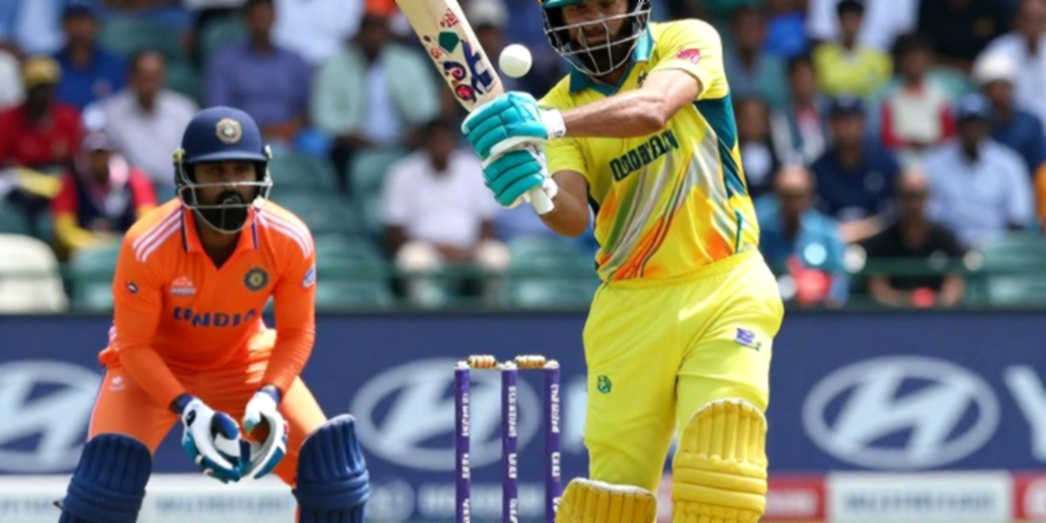
Picture a Test: four innings. In each, a new-ball phase, a middle spin window, and an older-ball phase of reverse or carrom. At Kingsmead, early seam movement gives way to turn later — Stage-1 states plainly that the wicket will turn later in the match. If Green does not bowl, whose neck carries those extra overs? Mostly the front-line quicks, and Beau Webster's.
Webster is the principal beneficiary of this injury. He has played the last three Tests at No 7 and filled the fourth-seamer role, and with Green unable to bowl, that role hardens. A caution follows from the maths: four bowlers covering four innings means roughly a quarter more work per innings. When fast bowlers' spells stretch in a Test, the edge of the third and fourth seamers dulls in the final session — precisely when hard balls against the tail are needed.
Here I get stuck. Kingsmead is dry and will turn later; if that holds, the second-spinner question grows louder. The signal, though, is that Kuhnemann is unlikely to play ahead of one of the three frontline quicks. Australia is reading the conditions one way and picking the side another.
I call this the gap between condition and selection. In a Test that gap can swing a match inside a single innings, especially when the pitch turns on day four and only one frontline spinner is in the XI. I call it conservatism, but it is more than habit — it is a cultural preference. Pace-first is part of Australia's identity, and that identity does not wobble even on a turning away surface.
Notice how directly Green's injury touches this decision. With Green bowling, he could have balanced two spinners as the fourth seamer — three quicks, one all-rounder pace option and two spinners in one XI. The injury removed that flexibility. The selectors now face two options — add pace or add spin — with no room to add both.
Now the No 5. Cooper Connolly against Nic Maddinson is the headline story. Read deeper and it is a spin-cover decision, not merely a batting one. Connolly bowls left-arm orthodox, so picking him gives the side an extra spin option alongside a No 5 batter — useful on a dry Kingsmead.
Maddinson's story is different: he has not played a Test since 2026. Returning after a long absence raises the question of red-ball rhythm, not only form. Here is a structural insight: Australia has no like-for-like replacement for Green in the middle order. Maddinson's recall is an admission of that void. For an elite side, the batting middle-order bench is comparatively thin — one injury and one fractured finger are enough to expose it.
The No 5 vacancy sends a ripple up the order too. Head opening, Carey at six, Webster at seven — the shape now forming is a balance built by force. Each step slips, and the spine of the side shifts with it. The team will hold, but it will feel fragile underneath.
Josh Inglis's fractured finger deserves its own reading. In a Test series, injuries compound. Green out, Inglis's finger cracked — pressure on the middle order at two points at once. My old counting habit helps here. In 2026, at nineteen, I watched the W-League Grand Final from my Sydney flat, a match nobody was allowed to attend — Melbourne City 1, Sydney FC 0 at AAMI Park, zero fans. I recorded ninety minutes of ambient audio: fourteen distinct voices, the ball echoing, six minutes of silence after the goal. That day I learned to read absence as presence. Green's missing bowling is the same — an absence that changes the shape of the match. The grand final nobody was allowed to attend taught me that.
Here I am immovable. The headlines say "cruel timing" — a young all-rounder's rise interrupted. I will not call it mere misfortune. An abdominal strain sustained bowling in an ODI, on top of a pre-existing shoulder problem, is the product of a specific calendar rhythm.
The injury came in the final ODI, the first Test is imminent, and there is no recovery window in between. Russia at 3 a.m. taught me that devotion does not require a sensible schedule — but in cricket the question is who receives that unsensible labour. Fans stay up at three in the morning; players break their bodies switching formats all year. The question is not romantic devotion but labour management. Who benefits from the unsensible schedule, and who pays.
Women's cricket offers the comparison. In 2026 I kept two tracks at once — the men's World Cup in Russia and the women's Asian Cup in Amman. In Amman, Japan 1-0 Australia, three thousand fans, sixteen matches in the tournament. I logged 64 men's World Cup matches and 16 women's Asian Cup matches in one spreadsheet, using identical metrics — xG, pressing height, rest-defence. Against the habit of treating women's tactics as smaller, my only weapon was parity of measurement. The same rule holds in cricket: measure the load, not the romance.
Now the observation that challenges the conventional wisdom. The conventional view: Green's absence hurts Australia's batting most, and Durban is cruel timing. My reading runs the other way. With Green out, Australia's batting cover is adequate — Connolly or Maddinson can hold No 5, Webster is at seven, Carey at six. The real hole is in the bowling-overs ledger, not the batting.
What the headline calls "cruel timing" is a cultural blind spot. An all-rounder's value is double, yet injury halves him — and selection culture still treats him as a full asset. When the side names him as a batter only, it adds a batter and loses a bowling option, while the ledger is not kept that way. That is the real hidden weakness.
And the most important point: in this Durban Test, Australia's real gamble is not Green's fitness — it is pace-first conservatism on a pitch that will turn. If the surface turns on day four and only one spinner is in the XI, control can slip away. The gap between condition and selection is the match's hidden hinge, and it is a bigger question than Green's injury.
Lay out the risk and three tiers appear. The largest is over-redistribution — losing Green's bowling loads the frontline quicks. The second is simultaneity: Green out and Inglis's finger in the same window, testing depth at more than one point. The third is systemic: no recovery gap between the ODI and Test legs.
The worst case: Green's rehab stalls, he is out for the series as a bowler and struggles as a batter. The base case: he misses the first Test, returns batter-only later, and the side rotates Connolly and Maddinson while holding Webster. The optimistic case: he finds rhythm as a batter and the pace attack absorbs the missing overs without strain.
There is a dimension on which I hold a clear position. The moment injury news breaks, market prices move — live data feeds, fantasy, betting. Where the datafication of sport ends in live feeds sold to betting companies, it reaches its darkest edge. And the irony: this injury is itself the output of a data-driven calendar — the system that breaks the body then sells news of the broken body to the market.
I will close with a request to fans. When you watch the scoreboard in this series, count once — how many bowlers are used, and who tires in which session. Women's football needed a louder voice; now I know it needs a longer memory. That memory is built not from statistics but from counting overs and listening to the silence of missing bowling. Green may return; the rhythm may return. The question will remain: will Australia close the gap between its reading of a dry pitch and its own identity, or will that gap keep returning under new names in the shadow of championship points?